It looks like a solid deal on paper. A proper office. Your logo on the door. A lease that locks in your rent for five years so you don’t have to think about it every month.
And then six months later, your team doubles. Or halves. Or pivots entirely, and suddenly you’re a ten-person SaaS company paying for a floor that was designed for twenty-five people who build furniture.
The five-year lease feels like stability. Most of the time, it’s a long-term bet against your own ability to pivot. ]
The Math Nobody Does Before Signing
Here’s the thing about long-term leases: they’re priced to look affordable monthly and terrifying annually. A modest office for a ten-person team in a decent part of Karachi, once you factor in the deposit, the fit-out, the furniture, the generator backup, the internet setup, and the first few months of rent, easily runs into seven figures before a single employee has sat down. That’s capital that could have hired two engineers, funded a marketing push, or simply stayed in the bank for the quarter when things got harder than the forecast said they would.
The real cost of a fixed lease isn’t the monthly number. It’s the ceiling it puts on every other decision startups in Pakistan make. You can’t hire someone new without thinking about whether you have enough desks. You can’t downsize without thinking about the three years left on the contract. Every business decision gets filtered through a real estate obligation that has no idea what your startup actually needs right now.
The Startup Paradox: Signing Certainty Into an Uncertain Business
Startups are, by definition, experiments. The whole point is to learn, adjust, and survive long enough to find something that works. A five-year lease is the opposite of that. It’s a bet that in 2031, your team size, your location needs, your cash position, and your business model will be close enough to what they are today that locking in now makes sense.
Founders who sign five-year leases are usually doing it for the right reasons: professionalism, stability, a signal to investors and clients that the company is serious. But there’s a difference between looking stable and being resilient. And a startup bleeding rent on a half-empty floor is neither stable nor resilient.
A recent analysis of coworking versus traditional office costs across major cities found flexible workspaces more affordable than traditional leases in 97% of markets studied, with annual savings for a ten-person team reaching into the hundreds of thousands. It’s the kind of difference that changes what a company can actually do in a year.
What “Flexibility” Actually Buys You
People hear “flexible workspace” and think they’re paying a premium for the privilege of not committing. That’s backwards.
What flexibility actually buys is the right to be wrong. You can hire three people this quarter without locking in three desks for five years. You can try a private office suite, see if your team actually comes in, and adjust. You can expand when a client signs or contract when one doesn’t. That optionality has real financial value, and in an environment where 77% of small businesses are reporting rising costs and unpredictable revenue, it’s not a nice-to-have anymore.
The companies treating their workspace like a variable cost are the ones keeping capital free for the things that actually move the needle. The ones locked into fixed leases are the ones doing the math on their burn rate at 11pm.
This Is Exactly What Work Hall Was Built For
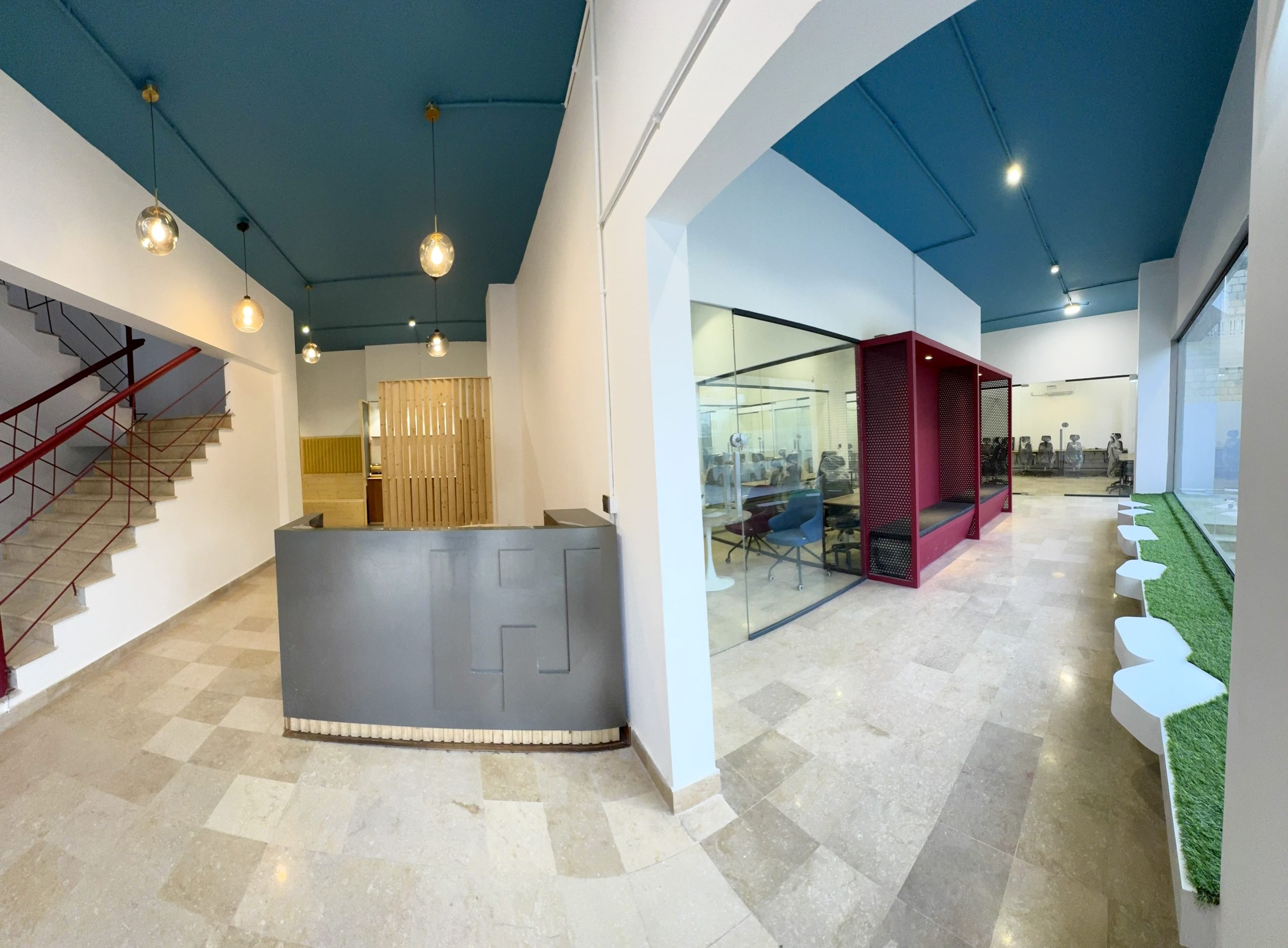
Work Hall exists for the company that’s too serious to work from a café but too smart to sign away five years of flexibility for a private lobby.
Whether you’re a four-person founding team that needs a home base without a security deposit the size of a Series A, a fifteen-person company that’s growing too fast to predict next quarter’s headcount, or a remote-first team that just needs somewhere professional to meet clients, the setup is designed around what you actually need, not what a commercial landlord’s standard contract assumes you need.
Private spaces for teams. Dedicated desks for individuals. Meeting rooms when I need them. No long-term commitment required. Just a coworking space near me that costs what it should cost, for as long as I actually need it.
Fixed costs are a liability. Flexibility is a strategy.
The only question worth asking when you’re ready to get off the kitchen table is: what does your business actually NEED right now? Not in five years. Right now.
That answer changes more often than any lease will allow for.
Leave a Reply