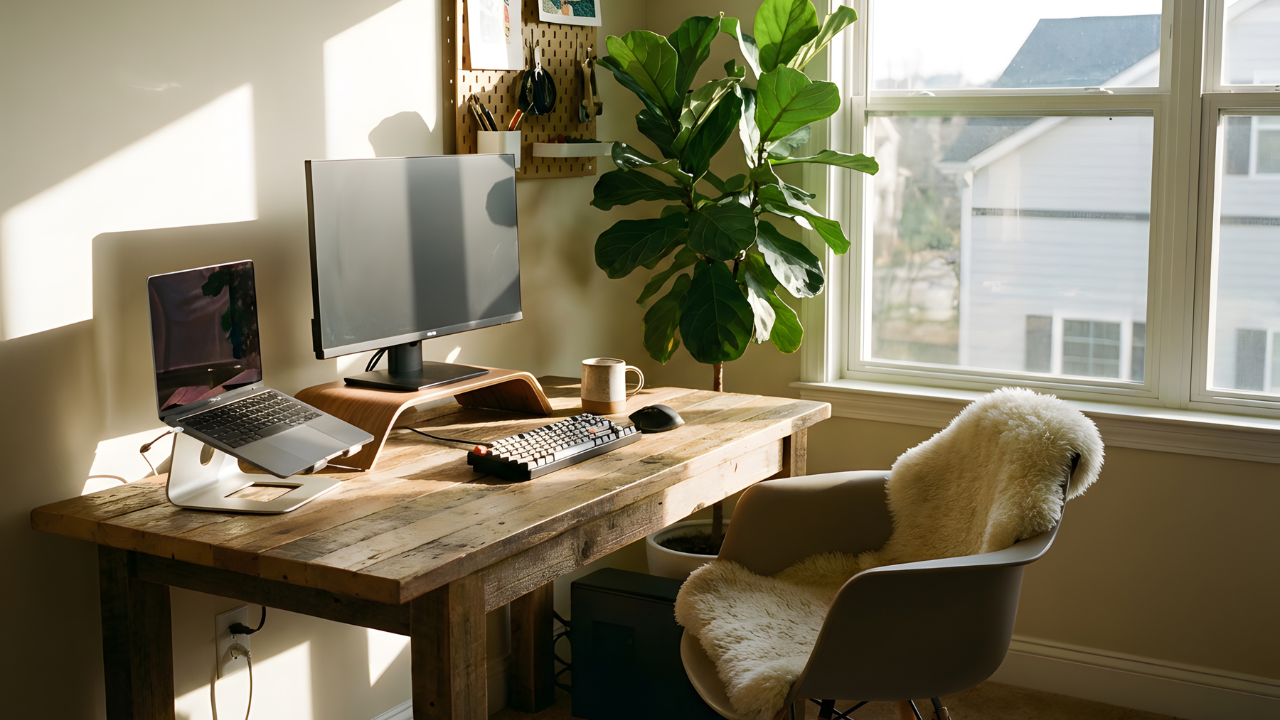
There are either workspaces with pristine white desks with nothing but a laptop on or vibrant rooms bursting with color, art, and personality. Honestly, both design aesthetics have their own benefits and drawbacks.
This is the core difference between minimalism and maximalism. Sometimes, minimalism feels soulless, and maximalism looks cluttered. But that’s not the complete reality.
Let’s break it down further.
What Is Minimalism in Workspaces?
Minimalist work environments are all about restraint. Whites, grays, soft beiges. Clean, clutter-free surfaces. Limited décor, if any. Everything has a place, and nothing feels excessive. The idea is that by stripping away the unnecessary, you create clarity. You remove visual noise. You make room for focus and efficiency.
You’ll often find this style in corporate offices, tech companies, and roles that require deep concentration. Shared office spaces designed for productivity often lean minimal too, especially in dedicated work zones where distraction is the enemy.
Benefits of Minimalism at Work
There’s a reason minimalism became so popular in professional settings. It works at least for certain types of work.
1. Reduced Distractions:
When there’s less to look at, there’s less to pull your attention away. Your brain doesn’t have to process as much visual information, which means more mental energy for the task at hand.
2. Easier Mental Processing:
A clean desk can lead to a clearer mind. For people who feel overwhelmed by clutter, minimalism can be incredibly calming.
3. Supports Deep Focus and Productivity:
If your job involves writing, coding, analysis, or anything that requires sustained attention, a minimalist workspace can help you stay in the zone longer.
4. Creates a Sense of Calm and Order:
There’s something soothing about walking into a space that feels organized and intentional. It sets a tone before you even sit down.
The Limits of Minimalism
When a workspace becomes too minimal, it can feel cold. Impersonal. Even dead sometimes.
You might have seen those offices that look more like showrooms than places where people actually spend 40 hours a week. They photograph beautifully, but they don’t feel lived in.
Not everyone thrives in silence and stark simplicity. Some people find it draining. Even depressing.
What Is Maximalism in Workspaces?
On the opposite end of the spectrum, you’ve got maximalism. This is a design that celebrates abundance. Bold colors. Layered textures. Art on the walls, plants in the corners, patterns that don’t apologize for being loud.
Maximalist work environments are expressive and personality-driven. They tell a story. They reflect the people who use them.
The philosophy here is that inspiration comes from abundance. Energy, creativity, and culture are built through design choices that feel intentional and alive.
Benefits of Maximalism at Work
Maximalism brings something to the table that minimalism can’t always deliver: feeling.
1. It Encourages Creativity and Ideation:
When your environment is rich with color, texture, and visual interest, your brain makes more connections. It’s stimulating in a good way.
2. It Strengthens Identity and Culture:
A maximalist workspace can communicate who a company is and what it values. It makes a statement. It gives people something to connect with.
3. It Makes Spaces Feel Human and Expressive:
We spend a lot of time at work. A space that feels warm, personal, and a little quirky can make that time feel less robotic.
4. It Can Boost Mood and Social Interaction:
Bright colors and engaging design elements have been shown to lift spirits and encourage conversation. In collaborative workspaces or flex office setups, that energy matters.
The Risks of Maximalism
But maximalism has its downsides too.
1. Visual Overload:
Too much of anything becomes noise. If every surface is competing for attention, it’s hard to focus. Your brain gets tired faster.
2. Difficulty Focusing for Long Periods:
If you’re trying to write a report or analyze data in a room full of bold patterns and bright colors, good luck. It’s distracting.
3. Can Feel Chaotic Without Structure:
Maximalism requires intention. Without it, spaces just look messy.
So, What’s Better?
Instead of forcing an entire office into one aesthetic, the smarter approach is zoned design. Create minimalist spaces for focus and concentration. Design maximalist spaces for collaboration, creativity, and connection.
This is especially important in coworking spaces and flexible work environments, where different people are doing different things at different times.
Work Hall Has the Best of Both Aesthetics
At Work Hall, we don’t believe in design dogma. We believe in designing for how people work.
That’s why our coworking spaces in Karachi are built around flexibility and balance. We use minimalist principles where they matter. These are spaces designed for deep work, clarity, and comfort.
But we also bring in maximalist elements where energy and connection matter most. Our common areas, lounges, and collaboration zones are vibrant. There’s art. There’s color. There’s texture. These spaces are meant to spark conversation.
Leave a Reply