Traditional networking is a bit awkward. You walk into a room full of strangers, clutch a name badge like a lifejacket, and spend 20 minutes having the same conversation on loop. “So, what do you do?” *nervous laugh* “Oh, that’s interesting!” It’s exhausting, and honestly, most of those business cards end up in a junk drawer.
But here’s the thing: the best professional connections you’ll ever make? They usually don’t happen at formal networking events. They happen naturally, over coffee, during a casual hallway chat, or when someone leans over and says, “Hey, do you know anything about Instagram ads?” And nowhere does this kind of magic happen more consistently than in a shared workspace.
The Accidental Introduction
There’s a concept in sociology called “weak ties”. The idea that your closest friends and colleagues aren’t actually the ones who open the most doors for you. It’s the people you know casually. The ones you bump into occasionally. The ones who exist just outside your usual circle. Research has consistently shown that weak ties are responsible for a huge chunk of job opportunities, client referrals, and business partnerships.
You grab a coffee. Someone mentions they’re launching a product. You happen to know someone who does exactly what they need. Boom! You just made two people’s days better.
Shared Spaces Remove the “Sales Pitch” Energy
One reason people dread networking is the transactional feeling of it, like every conversation has an agenda lurking underneath. In coworking spaces, that pressure mostly disappears. You’re all just… working. Nobody’s there to pitch you anything. They’re there to get stuff done.
This creates a genuinely relaxed dynamic where real conversations happen. When someone asks what you’re working on, it’s out of genuine curiosity, not because they’re calculating whether you’re a useful contact. And when you share what you do, it comes out naturally, not as a rehearsed elevator pitch, but as an actual human talking about something they care about.
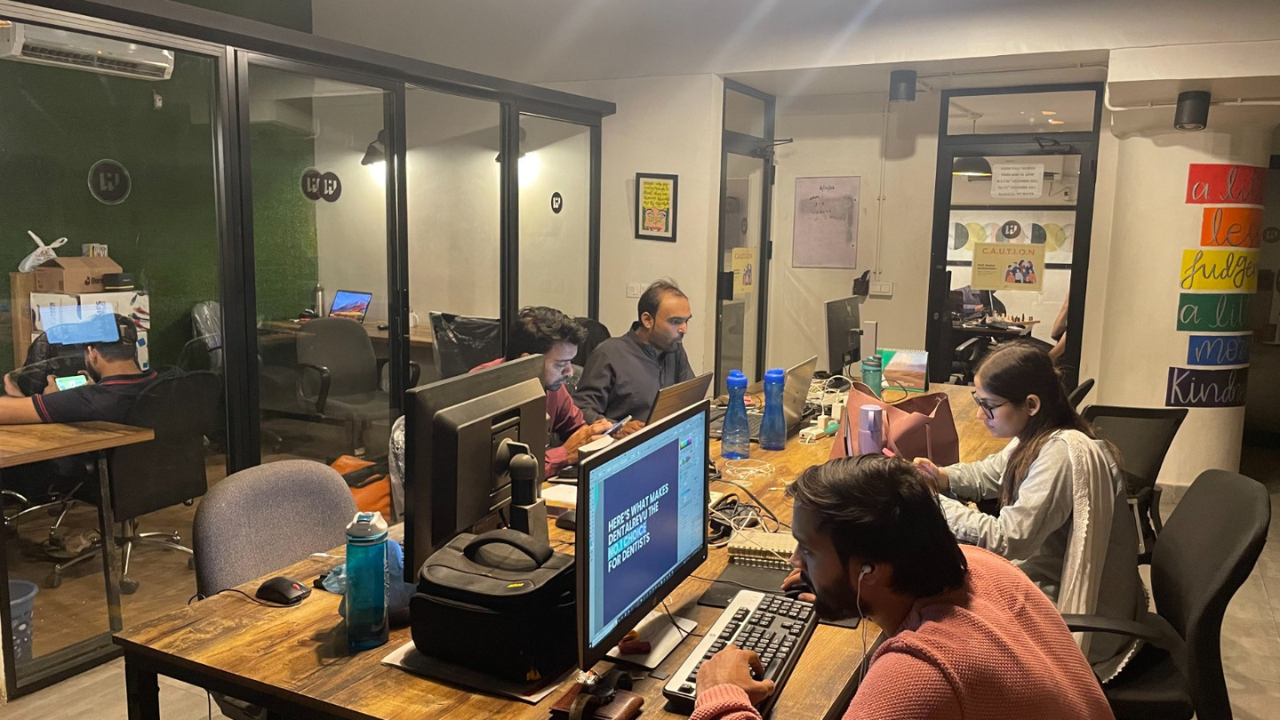
At Work Hall, the community is intentionally mixed. You’ve got people from tech, media, fashion, finance, and everything in between all sharing the same space. That diversity of industries under one roof means your next conversation could go anywhere. Maybe the person at the next hot desk is a branding consultant. Maybe they’re building an app that perfectly complements your business. You won’t know until you say hi.
The Compound Effect of Showing Up
Here’s something nobody tells you about networking: consistency matters more than charisma. You don’t need to be the most outgoing person in the room. You just need to show up regularly enough that people start to know your face, your name, and what you do.
This is where coworking has a massive advantage over traditional networking events. When you work from the same space every day (or even a few days a week), you naturally build familiarity with the people around you. Trust develops over time, not because you handed someone a polished pitch deck, but because they’ve seen you show up, work hard, and be a decent human being in shared spaces.
At Work Hall, members often report that their best clients, collaborators, and even friends came from people they simply sat near on a random Tuesday.
Community Events: When It Gets Even Better
Beyond the everyday organic interactions, coworking spaces like Work Hall regularly host community events, workshops, panel discussions, casual meetups, and skill-sharing sessions. These create intentional moments for connection without the stuffiness of a formal networking event.
Attending a workshop on social media strategy at your coworking space isn’t just about the content; it’s about meeting the 15 other people in that room who showed up because they care about the same things you do. Shared context, shared interests, shared space. The conversation practically starts itself.
So, Should You Actually Try This?
If you’re a freelancer working from home, a remote employee craving human interaction, or a founder who needs to get out of their own head, a Work Hall co-working space membership might be the single best “networking” investment you can make.
You’re just going to work. And somewhere in between the focused work sessions, the coffee runs, and the casual “what are you building?” conversations, you’ll find that your professional network has quietly grown.
Your next big opportunity really might be sitting two desks away. The only question is whether you’re in the room.
Leave a Reply