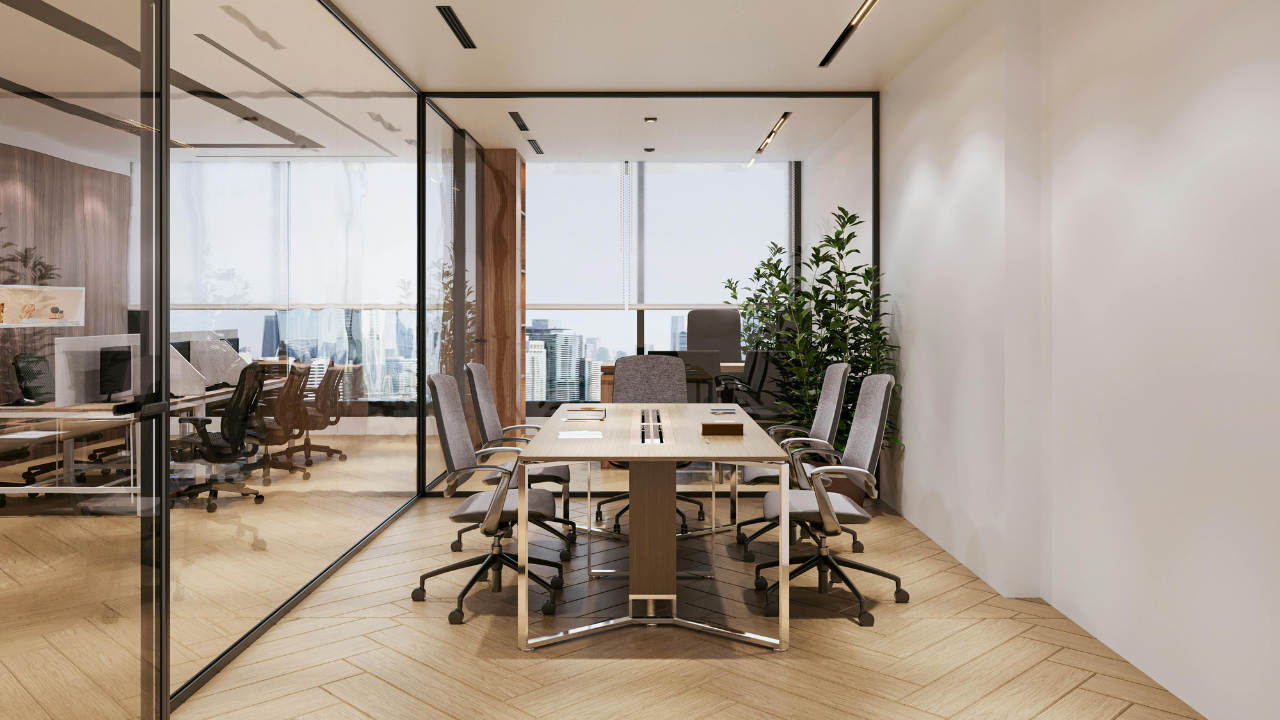
Workspace used to be this designated desk in the glass-walled office, where you just sit 9 hours a day and work tirelessly. But now, the fundamental concept of doing work is changing, and that’s why the design of workspaces is also modifying.
You no longer need to have a cubicle to work efficiently. Your couch or balcony can become your workspace as long as you have your laptop and internet connection. But it is also a fact that dedicated offices with collaborative spaces are important for some professionals.
Let’s explore the top workspace types so you can choose the most suitable one.
Popular Types of Workspaces for Maximum Productivity
1. Traditional Office Workspace
The traditional office is what most people picture when they think of “going to work.” It’s the classic setup that’s been around for decades, a dedicated commercial space with assigned desks, meeting rooms, and a structured layout.
Key characteristics include fixed working hours, permanent desk assignments, and a clear separation between work and home life. These offices typically feature either cubicles that give employees semi-private workstations or private offices for managers and senior staff.
Pros of Traditional Offices
Traditional workspaces offer structure and routine. You know exactly where you’ll be working each day, and there’s a clear distinction between “work mode” and “home mode.”
Cons of Traditional Offices
The biggest drawback is limited flexibility. You’re tied to specific hours and a specific location, which doesn’t work well for everyone’s lifestyle. Traditional offices can also be inefficient for modern work styles, especially for teams that need to collaborate fluidly or individuals who work best at different times of day.
The overhead costs are substantial, too. Companies pay for space whether employees are there or not, which became painfully obvious during recent shifts to remote work.
2. Open Office Workspace
Open-plan offices became trendy in the tech world and spread to many other industries. Instead of cubicles and walls, these spaces feature large, shared areas where teams work side by side with minimal physical barriers.
Benefits of Open Offices
The main selling point is enhanced collaboration. When everyone can see and hear each other, spontaneous conversations happen more naturally.
This setup also promotes better communication across teams and departments, breaking down the silos that can form in traditional office layouts.
Challenges of the Open Plan
However, open offices come with real downsides. Noise levels can be distracting, making it hard to concentrate on focused work. The constant activity creates distractions.
3. Remote/Home Workspace
Remote work went from a rare perk to a mainstream option. A remote workspace is simply wherever you choose to work outside a traditional office. It can be a cafe, a nearby park, or even your bedroom.
The rise of remote work has fundamentally changed how we think about where work happens. Technology made it possible, but the benefits made it stick.
Advantages of Working Remotely
Flexibility is the headline benefit. You control your schedule, your environment, and how you structure your day. There’s no commute, which saves time and money. You also gain autonomy over your workspace setup.
Drawbacks of Remote Work
The flip side is isolation. Without colleagues around, some people feel disconnected and lonely. There’s also the challenge of blurred work-life boundaries.
Importance of Intentional Setup
Working from your couch with your laptop isn’t the same as having a dedicated home office. The most successful remote workers create intentional setups with proper desks, good lighting, and clear boundaries between work and personal space.
4. Co-Working Workspace
Coworking spaces offer a middle ground between traditional offices and working from home. These are shared professional environments where individuals and companies rent workspace on flexible terms.
Key Features
Shared amenities are standard, including high-speed internet, printers, meeting rooms, kitchen facilities, and sometimes perks like coffee bars or event spaces. Flexible memberships mean you’re not locked into long-term leases.
Benefits for Modern Workers
Coworking spaces excel at providing networking opportunities. You’re surrounded by other professionals, which can lead to collaborations, referrals, and new friendships. You get a professional environment without the commitment and expense of a traditional office lease.
How Work Hall Supports Multiple Workspace Types
At Work Hall, we understand that different people and teams need different workspace solutions.
Private Work Areas
Need to focus on a complex project? Our quiet zones give you a distraction-free environment to do your best deep work. These spaces are perfect for calls, concentration, or confidential work.
Shared Co-Working Spaces
Looking for energy and community? Our open coworking areas are best for collaboration and networking. You’ll find hot desks and shared tables where you can work alongside other professionals, making connections while getting things done.
The right choice depends on your work style, your role, your budget, and your priorities. And remember: your ideal workspace might change over time as your career, life, or business evolves.
Leave a Reply