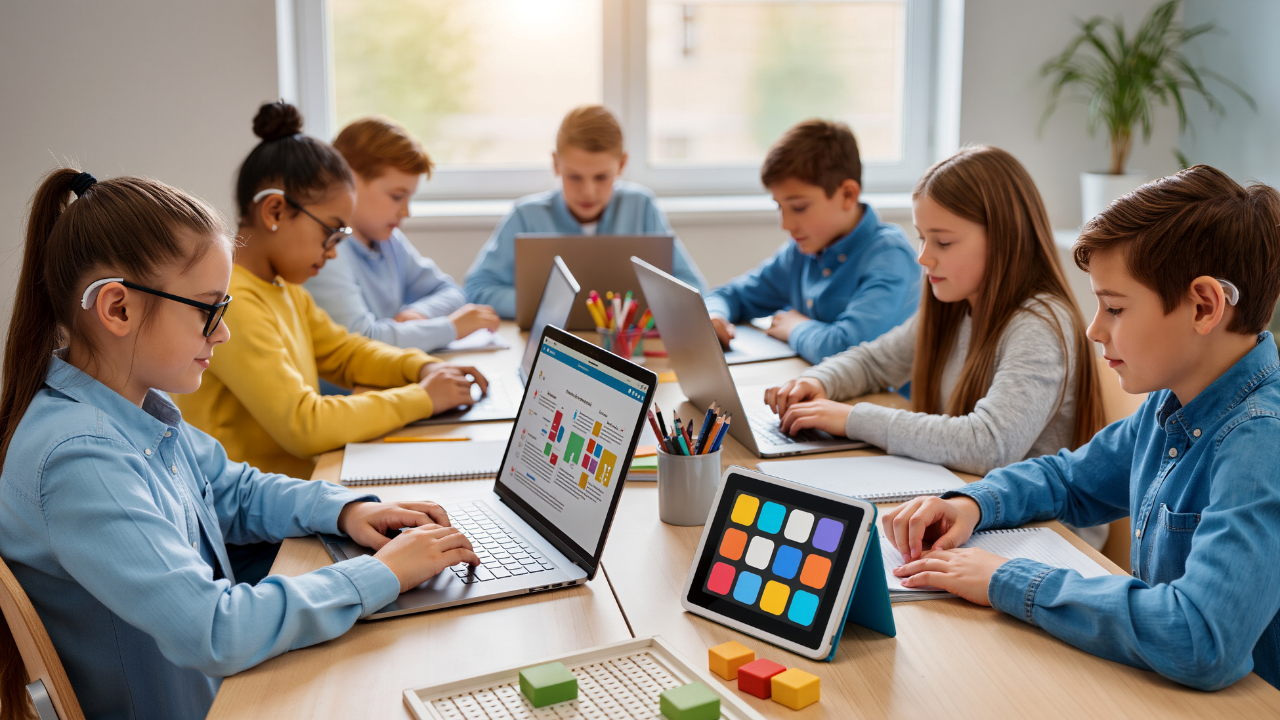
Increased internet penetration and COVID-19 have shifted how things work. The Pakistani education system, despite all of its shortcomings, is surprisingly growing in the Edtech space.
According to the statistics, the online education market of Pakistan has reached USD 327.79 million in 2024 and is projected to grow to USD 2,343.77 million by 2033 at a CAGR of 24.43%. These stunning numbers show that the youth, people under 30, are highly tech-savvy and like to enroll in self-paced courses.
Think back just a few years. How many of us owned smartphones then versus now? This change in device ownership has been a game-changer for education.
Key Government Initiatives Driving the Rise of EdTech in Pakistan
There are several government-led projects that are actively transforming the digital education sector.
- National Distance Education Strategy (NDES): Developed by the Ministry of Federal Education with UNICEF and EdTech Hub support, emphasizing evidence-based distance learning for emergencies and equity.
- TeleSchool App: Launched in 2023, it offers digital TV channels and on-demand video libraries, reaching millions offline and online.
- Smart Classrooms: Hundreds of tech-enabled classrooms established in ICT, AJK, and GB, plus partnerships like Google for Education for teacher training and tools.
- Digital Pakistan Vision: Broader push for ICT in education, aligning with policies to build a knowledge-based economy.
Public-Private Partnerships in Spreading the EdTech Trend
The Jazz Foundation launched the ‘Jazz Smart School’ program in partnership with federal authorities, setting up digital learning centers with laptops, projectors, tablets, and mobile broadband in various schools.
Another significant collaboration came in June 2024 when Google and Pakistan’s education ministry announced plans to establish smart schools.
Impact of EdTech on Students
1. Personalized Learning Becomes Possible
Traditional classrooms often follow a one-size-fits-all approach. EdTech changes this. Students can now learn at their own pace. It means they can revisit difficult concepts and skip ahead when they’ve understood a concept.
2. Access Beyond Geography
For students in remote areas, quality education has always been out of reach. EdTech is changing that equation.
Students who might have learned only traditional skills in remote areas of the country now have access to science, technology, and engineering.
3. Building Digital Literacy
Perhaps one of the most underappreciated impacts is how EdTech naturally builds digital skills. Students using online platforms become comfortable with technology. They develop competencies that will be essential for their future careers.
Emerging Trends in EdTech
1. Artificial Intelligence and Personalization
AI platforms can analyze learners’ strengths, weaknesses, and preferred learning styles. It can provide perfect recommendations as per your learning styles with unprecedented accuracy, then customize programs to suit individual pace and style.
2. Gamification of Study Methods
Remember how engaging games are? EdTech is bringing that engagement to education.
For example, Kar Muqabla infuses play and competition to enhance students’ learning experience, linking students from across the country through school competitions. When learning feels like play, students engage more deeply and retain information better.
3. Microlearning and Bite-Sized Content
Microlearning is gaining traction among young students because of shrinking attention spans. Microlearning delivers content in short, focused bursts lasting 5-10 minutes, boosting retention compared to longer formats.
4. Virtual and Augmented Reality
While still emerging in Pakistan, VR and AR offer incredible possibilities. Students can take virtual field trips to historical sites, explore complex scientific concepts in 3D, or practice real-world skills in safe virtual environments.
5. Data Analytics for Better Outcomes
Learning analytics harnesses AI to analyze student data on engagement, performance, and habits, with predictive models identifying struggling learners while progress trackers tailor study plans.
Teachers can now see patterns regarding which students are falling behind, which topics need more attention, and which teaching methods work best.
What Does the Future Look Like in EdTech?
In simple words, EdTech is not replacing traditional education. It is making it more accessible. The hybrid model combining the best of online and in-person learning seems to be the way forward.
For students, this means more personalized learning experiences and greater access to quality content. For teachers, it means powerful tools to enhance their teaching and better understand their students’ needs.
Build Your EdTech Vision at Work Hall
Whether you are an educator or an entrepreneur building the next big EdTech solution, Work Hall offers a perfect workspace for you in Karachi.
Work Hall provides modern coworking spaces designed for focused learning, collaboration, and innovation. With high-speed internet, reliable electricity, and comfortable workstations, we provide the perfect environment for professionals.
Leave a Reply